Short sci-fi story
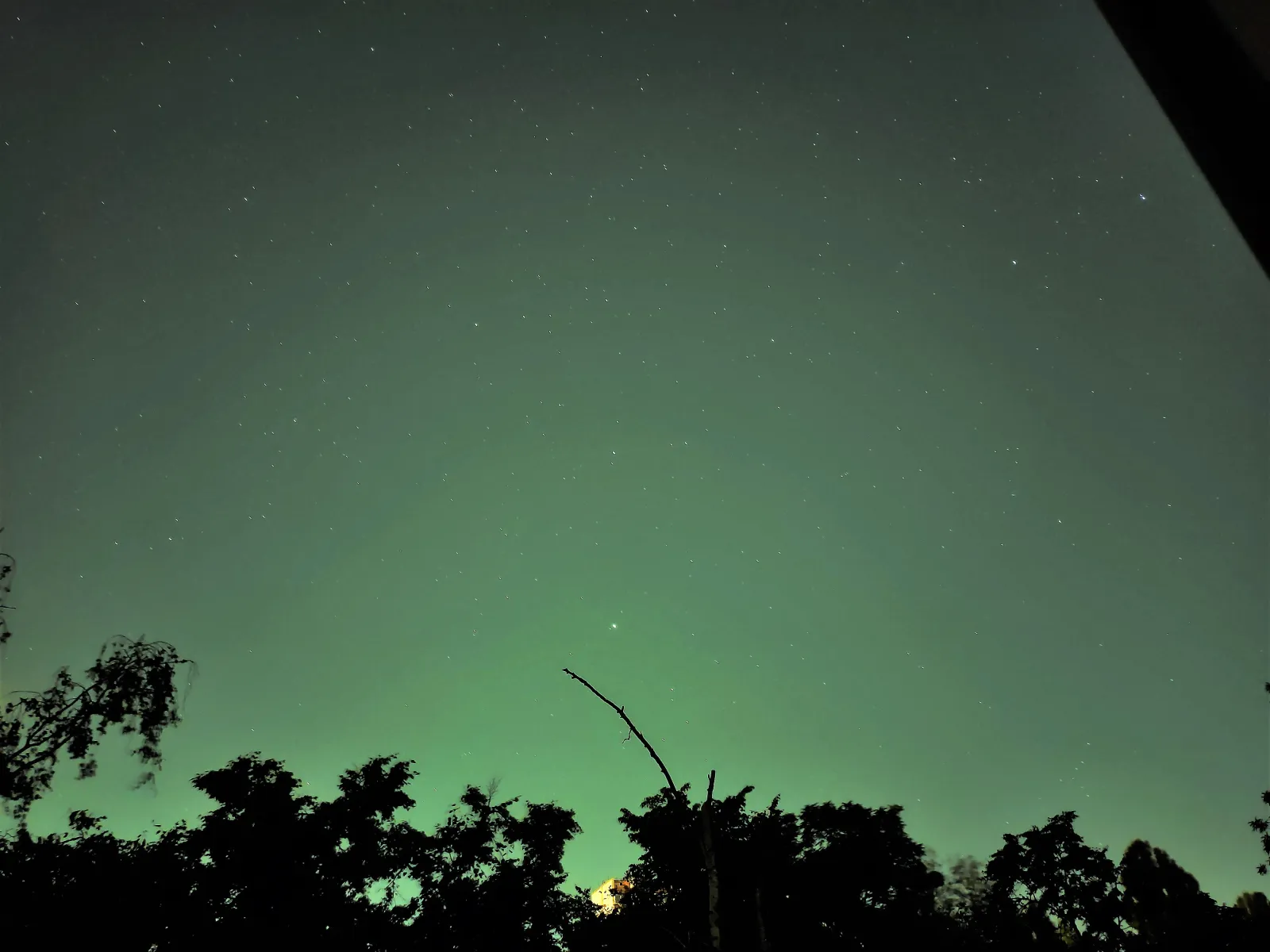
Prologue
We are a remarkable species — so far, the most beautiful in the known universe. Our biological existence is a blink in the history of the cosmos. I want to celebrate it. Stars were always our loyal companions in travel: real and imagined. This short story draws a cross-generational line between travelers — from ancient nomads to intergalactic voyagers. We share 99.9% of our genes. This is a spacetime journey of all of us.
Eternal trip
Rewind 25000 years
Paleolithic. I imagine a group of nomads, maybe family, sitting by the fire near their mammoth-bone-made shelter. It's late autumn, the land is covered by thin snow and nights, like this one, are alarmingly cold. The place – basin of Dnepr river, somewhere near present-day Kiev. Maybe this family is my far relatives. High chances, they actually are. It's night, but they are not scared. They're attentive. There aren't many sounds in the steppe at night, plains are not like the forest. But when you hear a wolf, you better get alarmed. The youngest boy from the family turned his fifth winter. He looks at small sparks as they fly away from the fire - all the way to the stars. He is amazed. He thinks that stars are sparks that reached the sky and now they are shining forever. He loves the stars; they make him dream.
Rewind 500 years
Middle Ages. Warm wind was blowing all night. The sails were pushing the ship towards the New World. Spanish Galleon, on her trip to the Americas, was loaded with fine European manufactures, fresh crew and a lot of hope and expectation. A young Basque officer, maybe my far relative, was learning the art of navigation. Instruments: sextant, clear sky and Pole Star. It was difficult to learn all the constellations… there are so many. In the almanac, where constellations are connected with lines and dots, it appears trivial to spot them, but when you look at the sky, with millions of stars, finding these patterns are getting hard. He is a fast learner, he'll be a great officer, and maybe a captain, someday. He takes the sextant, locates the Pole Star and informs the Officer on Duty on the readings. He loves the stars, they guide him.
Rewind 25 years
90's I'm still a child, although not so small. At that point, I would probably say that I'm not a child anymore, but this is a part of the equation. I'm with my friends, good friends. We are at the shore of the river Ros – the river that gave the name to all the Russian civilization. It's rather a small but clean river, with slow current and plenty of fish. It's night, our tents are placed in the forest and we set a fire. We are sitting around and singing songs with guitar, some of them already twice. But who cares? A friend of mine walks away from fire, I escort him. He says - "look at this". I ask - "what?" He points to the sky. The moon was not there, but the sky was bright. It was incredibly bright. I could easily see the Milky Way and feel the emptiness of the space, where our spaceship Earth is traveling. My "city made" eyes were not prepared. I was amazed. I fell in love with stars, they widened my horizons.
Rewind 15 years
2000's A weak sound of the mechanical clock and the clicks of the bearing instrument. Night, ship, Antarctica. I'm on duty. I should watch for Icebergs on the radar screen, every hour, take the barometer readings, measure the temperature and draw our position on the chart. Taking the barometer readings is cool staff, looking at radar screen not so cool. I really want to sleep, I mean REALLY. It's 3 AM, the night lasts only a few hours because we are so close to the South Pole. I go to the coffee machine and break the clock/bearing instrument silence with a strong noise of coffee grinder. Grrrrrrrr… then, the coffee-making bhruuuuuuu… now I have my cup of coffee.
"Sorry for waking you up, officer"
"It's ok"
"I'll have a look outside"
"Be careful"
I open the door outside of the command bridge. There's no wind tonight, but as we are moving with the speed of 15 knots, I do feel the wind. I take a sip of coffee and look at the sky. There are no cities in Antarctica, so no light contamination. The sky is packed with stars. I instantly remember my friends and how wonderful it was back then in the forest near the river Ros. I love the stars; they make me remember.
Present
2019 It's a summer end in Tuscany. I'm with my family and friends. The villa is big and set apart from even the smallest towns. We are in a real Italian countryside. Wine, cheese and ham - a typical plan for Tuscany. The villa is a seventeen-century old house, converted into Airbnb accommodation. There are wild animals somewhere near – we've seen deer and heard some wild pigs around. Children are happy. We set a bonfire with the lumber found in the nearby forest and prepare some meat stakes and fish. The scene was set. The sky was full of stars, the temperature was lower during the night, so we were sitting close to the bonfire. There were not so many differences in the scene with our Paleolithic ancestors. My son was probably thinking just about the same as the ancient five-years-old boy. His thoughts were flying to the stars deep into space.
Fast forward 50 years
Near future. Spaceship is on its way to Mars. A crew of six scientists is paving the way to the red planet. The journey is long: nine months of interplanetary flight. Robotics engineer from Eurospace (a private space mining company) relaxes on the very small bed in his cubicle. Unlike some other companies, Eurospace purchase VIP cubicles for their engineers, thus he is lucky to have a small window in his room (other companies make their employees fly on windowless cubicles). The window is located near the bed, very close to the pillow. While laying on the bed with the head on the pillow, he can watch the space pass by (just like business class passengers can do but on another scale). His mother gave him a copy of The Little Prince before he boarded. He hasn't opened it. The window is enough. The view is stunning when the light is off. Erik (his name) likes to put his head very close to the window, press his nose to the cold glass and see how the stars are fading in the vapor of his breathing. Nine months of stars, only stars. Plenty of time to think, to reconsider, to create and to destroy and then create once again. Nine months with the very same people. But stars help. Erik feels a connection with the stars - like suddenly this interplanetary medium is familiar for him. He feels like stars are his friends. He imagines generations of travelers throughout the history of humanity that were looking at the stars the same way he is looking right now. Erik feels that he is connected with the rest of the travelers - long-gone souls that nobody will remember. They live as a reflection of the stars. Their forgotten adventures and endeavors made possible this travel to Mars. He feels grateful. To the stars and to humans that lived before him.
Fast forward 5000 years
Far future. Ten thousand years is nothing on a planetary scale. Planetary time counts in millions of years, not in thousands. Ten thousand years is less than a second on the universe scale. But in this time humans were able to develop from the mammoth-bone-made houses society to terraforming Mars and traveling the space via quantum entanglement. Physically people don't travel anymore, only their consciousness and memory. This allows interstellar journeys. For the 5-years-old boy of Paleolithic, it's easy to imagine how people travel with their consciousness. In his imagination, he sometimes travels to the stars as well.
Can consciousness be copied? Transferred? Those answers lead to immortality — but also to questions we cannot yet frame. Without the chemistry of a body, would we still love? Would we still want? The singularity is close, but it remains what it has always been: an enigma.
Back to Paleolithic
One of these consciousness travelers lingers near our five-year-old boy. The boy cannot see him, but he feels something inside — the need to explore, the urgency to search for the unknown. He cannot explain the feeling, but he knows it comes from the stars. They blink invitingly, mysteriously, sending a welcome message.
The feeling is a seed. The boy will carry it through every winter, every migration, every generation that follows. He doesn't know this yet. He just looks up, and the stars look back.
Epilogue
It is October 24th, I'm flying from Paris to Madrid and writing this last part of the story in my seat 7A. Surprisingly, there's a young girl in the adjacent seat 7B, reading Stephen Hawking's Brief History of Time. This makes me think that we are on the right path, and I'm not alone. When the majority prefer to grow up, I want to stay like a child. To grow this seed of imagination, fantasy, and endeavor that I have from my childhood. Maybe we are in minority, but we, the dreamers, will be the ones who will bring humanity to the final frontier – back to the stars.
Alejandro Uribarri, October 2019
Comments
Loading…
Log in or register to comment.